
Plenary Speakers
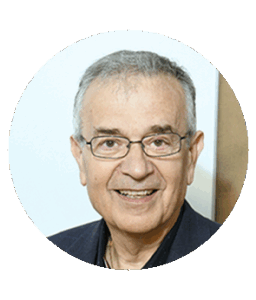
Mercouri G. Kanatzidis
Northwestern University & Argonne National Laboratory
Title
From Perovskites to Perovskitoids: Expanding the Structural Chemistry of Functional Metal Halides
Abstract
Metal halide perovskites have transformed the landscape of solution-processable semiconductors, especially for photovoltaics, light emission, and radiation detection. Their success arises from an unusual combination of strong optical absorption, long carrier lifetimes, defect tolerance, compositional flexibility, and low-temperature processability. However, the same structural softness and compositional tunability that make perovskites powerful also introduce persistent challenges, including phase instability, ion migration, moisture sensitivity, and light-induced halide segregation in wide-bandgap mixed-halide absorbers.
In this presentation, we will discuss how the broader structural chemistry of perovskite-derived materials opens new opportunities beyond the conventional corner-sharing ABX₃ perovskite framework. Particular emphasis will be placed on perovskitoids, a structurally related class of metal halides that retain some corner-sharing octahedral connectivity but also incorporate edge- or face-sharing octahedra. This mixed connectivity provides an additional design parameter, beyond composition and dimensionality, for controlling bandgap, charge transport, luminescence, and stability. Compared with conventional perovskites, perovskitoids offer a much broader structural landscape and can access bandgaps that would otherwise require halide alloying or dimensional reduction. In favorable cases, this enables wide-bandgap pure-iodide absorbers with improved photostability, avoiding the halide-segregation problem that limits mixed-halide perovskites in tandem solar cells.
Short Bio
Mercouri G. Kanatzidis is a Charles E. and Emma H. Morrison Professor of chemistry and professor of materials science and engineering at Northwestern University and Senior Scientist at Argonne National Laboratory.
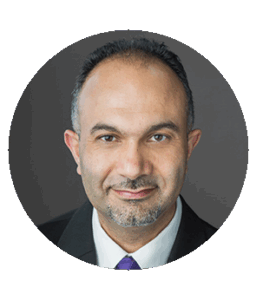
Omar Farha
Northwestern University
Abstract
TBA
Short Bio
Omar K. Farha is the Charles E. and Emma H. Morrison Professor and department chair in Chemistry at Northwestern University, an Executive Editor for ACS Applied Materials & Interfaces, and Chief Scientific Officer of Numat Technologies.
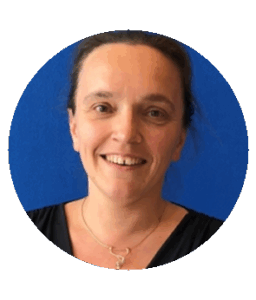
Veronique Van Speybroeck
Ghent University
Title
Towards Predictive Design of Nanoporous Materials for emerging technologies: How far can molecular modeling take us?
Abstract
Our society is confronted with major challenges which call for innovative technological solutions. Some of the most pressing questions are : How can we produce chemicals from sustainable feedstocks instead of fossil resources? How can we maintain healthy indoor air quality? How can we provide potable water also in water-scarce regions? Nanoporous materials, including zeolites, metal-organic frameworks, covalent organic frameworks, and related porous materials, offer unique opportunities to address these challenges as they have the ability to selectively adsorb, separate, store, and transform small molecules. Their tunable pore architectures and chemical functionalities raise an intriguing question: can we design such materials predictively for a desired application? In this talk I will specifically discuss the role that molecular modelling can play in facing this challenge.
Over the past decades, molecular modelling has evolved from a primarily explanatory tool towards a more powerful predictive discipline that increasingly guides the interpretation of experiments and the discovery of novel materials. Significant progress has been achieved and it is now become possible to quantitatively predict properties such as adsorption isotherms, phase-transition temperatures, and other experimental observables.
Despite these advances, truly predictive design remains a formidable challenge and put enormous demands on various components of the molecular modelling exercise. Real materials are never perfect, they possess defects and disorder. Furthermore the behaviour of the material is strongly dependent on the operating conditions, for example active sites only appear at given conditions or structural changes are induced by the working conditions. This requests for a molecular modelling approach that captures the time behaviour across various scales and is able to follow the whole trajectory when a feed of molecules is sent over a nanoporous material. Capturing such complexity requires simulations that span multiple length and time scales while maintaining quantum-mechanical accuracy in the underlying energies. Some properties like selectivities in catalysis or adsorption capacities are extremely sensitive to small energetic differences, placing stringent demands on the electronic structure methods. Recent developments in machine learning potentials have opened new possibilities to bridge accuracy and scale. Yet major challenges remain, particularly for reactive systems, complex chemical transformations and systems with difficult electronic structures.
In this talk, I will discuss recent progress towards the predictive design of nanostructured materials. Examples will be drawn from technologically important applications, including carbon capture, photocatalytic chemical conversions and the conversion of emerging feedstocks such as CO₂ into value-added chemicals. These examples illustrate how advances at the interface of quantum mechanics, statistical physics, and machine learning are bringing molecular modelling closer to experimental observables and moving the field towards predictive design. However, it will become clear that further progress requires close interactions between multiple disciplines, including advanced characterization techniques, fundamental developments in electronic-structure theory, precise experimental synthesis, and multiscale modeling approaches. I will argue that molecular modelling starting from the atomic scale, can take us a long way towards predictive design, but that realizing this vision ultimately requires a synergistic effort across a broad range of scientific disciplines.
Short Bio
Veronique Van Speybroeck is a full professor at Ghent University and head of the Center for Molecular Modeling (CMM).
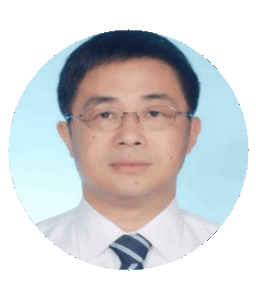
Yong Cui
Shanghai Jiao Tong University
Title
Chiral Aggregation and Crystallization
Abstract
Chirality science stands as a fundamental frontier underpinning biological systems and advanced functional materials, with irreplaceable strategic importance in pharmaceutical synthesis, fine chemical production, data storage, and chiral optoelectronics. Currently, precise cross-scale construction from molecular chiral motifs to macroscopically ordered chiral lattices remains a major challenge. Effective transmission, amplification, and stabilization of chiral information demand breakthroughs beyond conventional experience-guided assembly. Centered on the core scientific theme of chiral aggregation and crystallization, this report systematically addresses the hierarchical evolution and regulation mechanisms of chiral structures from molecules to crystals.
Short Bio
Yong Cui is a chair professor of chemistry at the School of Chemistry and Chemical Engineering, of the Shanghai Jiao Tong University.
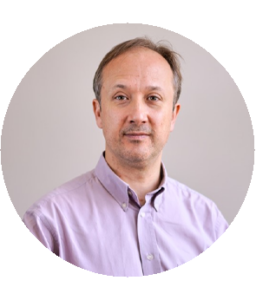
Christian Serre
Institut des Matériaux Poreux de Paris
Title
Recent progresses in biomedical properties of Metal-Organic Frameworks
Abstract
TBA
Short Bio
Christian Serre obtained his PhD in Chemistry in 1999 at the university of Versailles in France. After a post-doc in US, he started his CNRS career in 2001 at the Lavoisier Institute in Versailles where he discovered most of the MIL class of MOF materials. He was the first to propose the use of MOF nanoparticles as drug carriers with exceptional loading capacity. He created in 2016 a new Institute dedicated to porous solids and their applications in Paris, at Ecole Normale Supérieure and ESPCI. He has published to date more than 480 articles. Christian has received many awards and is a member of the French Academy of Sciences and the European Academy of Sciences. Christian is dedicating a particular attention for translational research with more than 50 families of patents; he is also the cofounder of two startups dedicated to MOF for indoor air quality or thermal batteries.